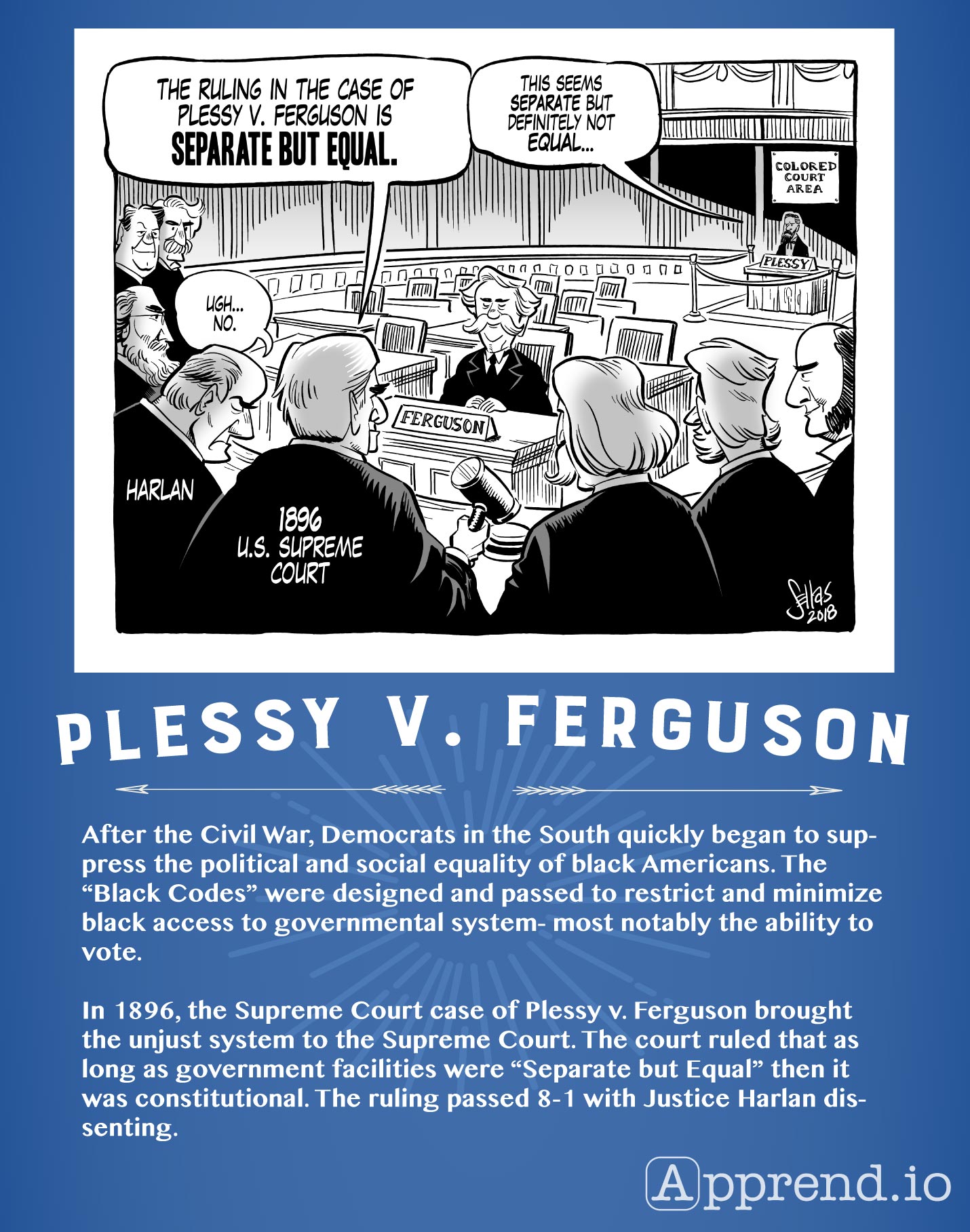
Today in class we did another mock trial, on the famous case that almost everyone has heard of which is Plessy v Ferguson. This case is a significant example of the "separate but equal" doctrine. I find this case to be extremely fascinating, as it was set up to be precisely what it was. Plessy was recruited by a group that wanted to repeal the act, the Committee of Citizens. The "incident" happened in 1892, when segregation existed not as a law, but as a custom or tradition to American Society. There were two different railroad cars: one for black people and one for white people. Plessy was instructed to sit on the "whites only" railroad car. When he was asked to get up and leave, he refused, and therefore he was charged and jailed. He later filed a petition against a judge, John H. Ferguson, that claimed that they were in violation of the Equal Protection clause of the 14th Amendment. When the case was brought to court, the court ruled in favor of Ferguson.
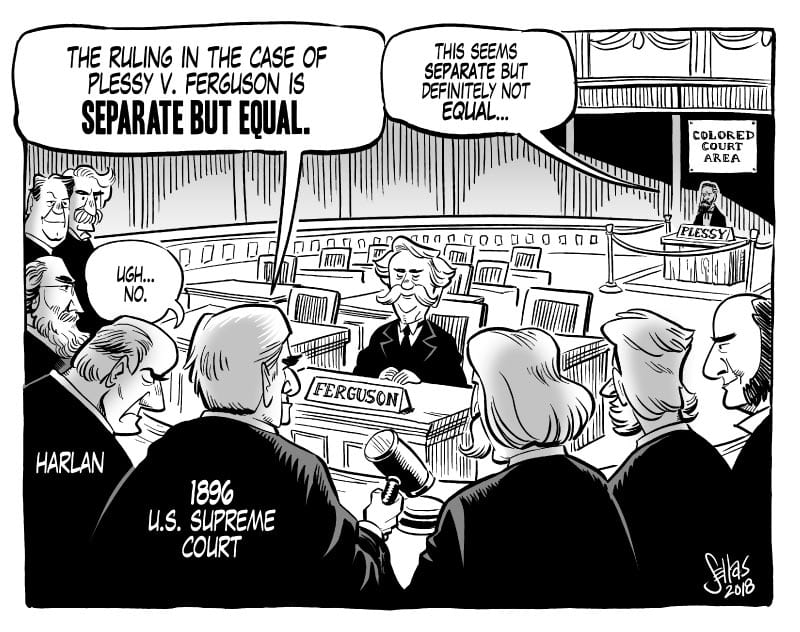
Plessy was what was called an "octoroon", which means he was 1/8 African American. Some even say that he was so light-skinned that he was black passing white. So those in favor of Plessy could argue on the legal side, saying that you can't separate his "white from his black". Another legal argument to be made is simply arguing the 14th Amendment, which made African Americans legal citizens of the United States. One also could simply argue that it is morally wrong to separate black people and white people, and using history to emphasize that slavery separated black people from white people, and that the 13th Amendment abolished this. So why is the separation still being practiced?
One interesting point that the state made in favor of Ferguson was the bathroom example. It is illegal for a man to use a woman's bathroom. And back in that era, it was illegal for a black man to sit in a "whites only" car. This was LAW. And this is also why the court ruled in favor of Ferguson. To argue from the legal standpoint is the strongest argument you can make.
Like I said previously, this case is really fascinating to me because it opened the door to what we now know as the Jim Crow laws. This case undid all of the progress that the Reconstruction Era created, and essentially rewinded the clock and brought black progress back to square one.
Comments
Post a Comment